The Garden Aisle Dilemma: Organic vs. Chemical Fertilizers
Imagine standing in the garden center, staring at two competing bags of fertilizer. One features a rustic, earth-toned label reading “All-Natural Living Organic.” The other boasts neon lettering promising “Instant Green-Up: Maximum Yield Formula.”
Your plants at home are looking a little pale and exhausted. You want immediate results, but you also want a garden that thrives for years to come. Which bag do you drop into your cart?
Let’s skip the marketing jargon and high-pressure sales pitches. Here is a candid, scientifically grounded look at how these two approaches work, where they fail, and how to choose what your plants actually need.
Redefining the Contenders
To make the best choice, we first need to understand exactly what these formulas are doing under the surface.
Chemical Fertilizers (The Synthetic Shortcut)
These are manufactured, chemically refined nutrients—typically isolated forms of Nitrogen (N), Phosphorus (P), and Potassium (K). They are engineered to bypass the soil's natural systems and dissolve instantly in water.
- The Analogy: It’s a high-octane energy drink for your plants. It delivers an immediate rush of energy and a sudden spike of green growth, but offers zero long-term sustenance for the ground beneath.
Organic Fertilizers (The Whole-Foods Strategy)
Derived directly from nature, these include compost, aged manures, bone meal, fish emulsion, and vermicompost. Instead of directly injecting nutrients into the plant's roots, they deposit raw organic matter into the soil.
- The Analogy: It’s a slow-cooked, nutrient-dense meal. Your garden requires time to break it down and digest it, but the process builds foundational, systemic strength over months and years.
Head-to-Head Comparison
Performance Metric | Chemical Fertilizers | Organic Fertilizers |
| Nutrient Delivery Speed | Immediate (within days) | Slow and steady (weeks to months) |
| Impact on Soil Health | Can degrade soil structure and kill beneficial life over time | Dramatically improves soil microbiome and crumb structure |
| Moisture Management | No structural impact (can exacerbate drought stress) | Transforms soil into a sponge, increasing water retention |
| Margin for Error | High risk of over-application (can burn roots and foliage) | Low risk; incredibly forgiving for beginner gardeners |
| Long-Term Economics | Requires perpetual repurchasing as nutrients leach away | Builds a self-sustaining ecosystem, reducing future costs |
| Environmental Footprint | High risk of chemical runoff, polluting local waterways | Minimal footprint; actively cycles waste back into the earth |
The Reality of Chemical Fertilizers: High Speed, High Risk
Synthetic fertilizers dissolve the moment they hit water. The plant's roots drink them up instantly, causing leaves to turn a deep green and stems to shoot upward. It is deeply satisfying to watch—akin to watching a smartphone battery jump from 5% to 80% in twenty minutes.
However, this rapid biological bypass comes with significant hidden costs:
- They Starve the Soil Ecosystem: Because synthetic nutrients bypass the soil's microbial network, the beneficial bacteria and fungi naturally present in the earth have nothing to feed on. Over time, your soil becomes dusty, compacted, and biologically dead.
- The Leaching Problem: Because these minerals are highly soluble, heavy rains or routine overwatering easily wash them straight through the soil profile. This wastes your money and sends chemical pollution into local water tables.
- The Nutrient Burn Hazard: Synthetic nitrogen is highly concentrated. A slight miscalculation in your measurements can easily result in "fertilizer burn," leaving your plants with crispy, brown leaf margins and permanently damaged root systems.
The Verdict on Synthetics: Chemical fertilizers act as excellent emergency medicine. If a plant is suffering from an acute nutrient deficiency and needs a life-saving intervention right now, a precise, light dose of synthetic fertilizer is a valuable tool. However, it is an unsustainable long-term strategy.
The Power of Organic Fertilizers: Investing in Living Soil
Organic fertilizers operate entirely through teamwork and biology. When you apply compost or aged manure to your garden beds, your plants cannot absorb it immediately. Instead, a subterranean workforce of earthworms, beneficial bacteria, and mycorrhizal fungi goes to work, breaking down the complex matter.
As this biological community digests the organic inputs, they release stabilized nutrients slowly, delivering them to your plants precisely when they are needed most.
Key Long-Term Benefits:
- Humus Creation: The breakdown of organic matter creates humus—a rich, dark, sponge-like material that locks both water and nutrients into the root zone.
- Microbial Diversity: A thriving microbial network acts as a natural defense system, outcompeting harmful pathogens and minimizing pest outbreaks.
- Physical Tilth: Organic amendments make heavy clay soil loose and airy, while giving loose sandy soil the structural integrity it needs to hold onto moisture.
The Practical Blueprint: A Balanced Approach
You do not have to choose a side in a dogmatic gardening war. Instead, you can use a pragmatic, soil-first strategy to get the best of both worlds.
[Primary Base: Organic Matter] ➔ [Targeted Additions: Vermicompost] ➔ [Emergency Only: Low-Dose Synthetics]
1. Establish an Organic Foundation
Make compost, vermicompost, or well-rotted manure the baseline diet for your garden. Every spring and autumn, apply a 3 to 4 cm layer across your garden beds, gently scratch it into the surface, and blanket it with a clean organic mulch.
2. Reserve Synthetics for Emergency Interventions
If a specific plant displays sudden yellowing leaves (nitrogen deficiency) or stalls dramatically mid-season, use a highly diluted, half-strength dose of liquid chemical fertilizer to snap it out of its slump. Think of it as a temporary supplement, not a daily diet.
3. Source Your Materials with Care
If you are purchasing organic inputs, always verify their quality beforehand. Excellent compost should possess a clean, earthy scent reminiscent of a forest floor—never an unpleasant ammonia smell. It should feel crumbly and uniformly dark, with no large, intact pieces of raw waste remaining.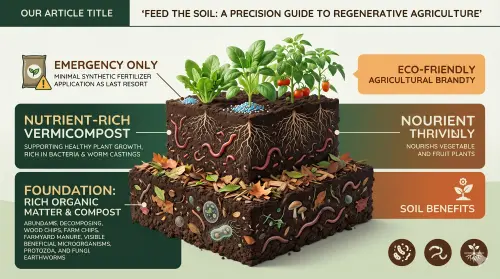
The Final Word
If your primary goal is a temporary, fast aesthetic fix, a small dose of chemical fertilizer will deliver it. But if you want to cultivate a resilient, drought-tolerant garden that grows more fertile with each passing year, organic amendments are the undisputed winner.
When you feed the soil rather than just the plant, you are stepping away from a cycle of constant chemical dependency and stepping into a vibrant, self-sustaining ecosystem.....,