How Organic Manures Turn Dirt into a Storyteller: A Guide to Living Soil
Soil tells stories. Under every footstep in a garden or field lies a living chronicle of past rains, forgotten seasons, and human care.
When we rely solely on synthetic chemical sprays, we aren't writing a story—we are shouting commands. Synthetics force a sudden, artificial spike in growth, leaving the underlying soil exhausted and blank. Organic manures, by contrast, act as patient editors. They whisper, stitch, and rewrite the subterranean script so that each subsequent chapter grows stronger, sweeter, and infinitely more resilient.
Imagine degraded soil as a piece of cloth—thinned by years of over-tilling, bleached by the sun, and weakened by chemical dependency. Organic manures are the threads, vibrant dyes, and steady hands that mend the fabric. They restore physical texture, hold water like a profound promise, and cultivate a bustling underworld of microbes.
Think of these microbes as tiny underground librarians: they catalog nutrients, lease them out exactly when plants ask for them, and prevent pathogenic pests from scribbling chaos in the margins.
Why the Narrative Shift Matters Right Now
In an era of instant gratification, quick-fix fertilizers promise a flash of green today at the expense of tomorrow. They strip away the soil's natural history. By returning to organic manures—whether farmyard manure, compost, vermicompost, or green covers—you introduce multi-layered benefits to your garden's ecosystem:
- Steady, Rhythmic Growth: Slow-release nutrients prevent the dramatic "boom-and-bust" cycles common with chemical feeds.
- Climate Resilience: Enhanced organic matter acts as a sponge, retaining critical moisture during scorching summer droughts.
- Built-in Immunity: Robust soil biomes foster stronger root systems capable of naturally resisting local pests and fungal infections.
- Economic Wisdom: Instead of watching costly synthetic nutrients wash away with the first heavy rain, organic matter locks fertility into place, lowering long-term input costs.
The Alchemy: How Dirt Becomes Living Soil
This transformation doesn't rely on magic; it relies on time and biology. When you introduce organic material, you are essentially throwing a feast for millions of microscopic organisms.
[Organic Input] ➔ [Microbial Feast] ➔ [Glues & Compounds Exhaled] ➔ [Soil Crumbs Form] ➔ [Humus Built]
As microbes consume this matter, they excrete microscopic binding agents that glue loose dirt particles into distinct crumbs, known as aggregates. These aggregates create a porous, subterranean network of tiny caves and highways. Air can circulate, and roots can push downward without resistance. Over time, these repeated cycles generate humus—the dark, sponge-like soul of fertile soil that allows the earth to drink less, feed more, and breathe easily.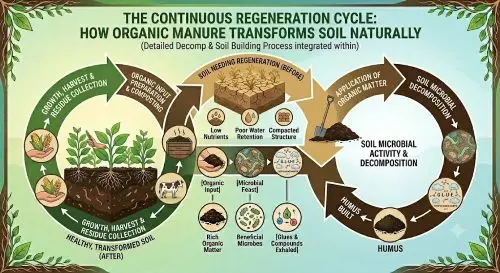
The Organic Toolkit: Choosing Your Characters
Not all organic manures serve the same purpose. Building a healthy soil profile requires understanding the unique strengths of each amendment:
Manure Type | Primary Superpower | Best Used For |
| Compost | Texture & Structural Balance | Upgrading overall soil tilt; safe for almost all plants. |
| Vermicompost | Microbial Blueprinting | Seedlings, heavy-feeding vegetables, and container plants. |
| Green Manures | Nitrogen Fixation & Biomass | Cover crops (like cowpea) grown to be turned back into the earth. |
| Biochar Blends | Permanent Habitat Creation | Locking in nutrients and stabilizing pH in sandy or degraded patches. |
The Master Blueprint Mix
For typical garden beds and urban setups, you can create a highly balanced, fertile foundation by mixing your amendments using this ratio:
- 60% Well-Rotted Farmyard Manure (for foundational structure and bulk)
- 25% Mature Compost (for mid-tier nutrient release and texturing)
- 15% Vermicompost (for an intense shot of microbial life and enzymes)
Step-by-Step: Rewriting Your Backyard Bed
Ready to apply this to your own garden? Here is a practical, step-by-step protocol to transform a standard backyard plot into a thriving ecosystem:
1. Prepare the Canvas
Clear away aggressive weeds and gently loosen the top layer of soil with a fork. Avoid aggressive tilling, which tears apart existing fungal networks.
2. Lay the Foundation
Spread a 3 to 4 cm layer of mature compost across the entire surface. This immediately improves the surface texture and creates a welcoming environment for earthworms.
3. Add the Core Nutrients
Layer 2 to 3 cm of well-rotted farmyard manure over the compost.
Safety Note: If you are using poultry manure, ensure it has been thoroughly composted beforehand; raw poultry manure is "hot" and can easily burn delicate root systems.
4. Target the Planting Zones
When digging holes for your specific crops (such as tomatoes, brinjal, or ornamental flowers), drop a generous handful of vermicompost directly into the base of the hole. This places beneficial microbes precisely where the young roots will emerge.
5. Seal the Story
Cover the entire bed with a protective layer of mulch, such as dry leaves or clean straw. This shields the surface from sun damage, locks in moisture, and provides continuous food for surface-dwelling organisms.
The Buyer's Discernment Checklist
If you are sourcing your organic amendments from local suppliers rather than brewing them at home, quality control is paramount. Substandard or un-aged manure can introduce weed seeds and pathogens into your clean garden space.
Before purchasing, run through this quick physical audit:
- The Scent Test: Mature, stable compost should never smell like ammonia or animal waste. It should smell distinctly like a damp forest floor after rain.
- The Texture Test: It should be dark, crumbly, and relatively uniform. If you see large, recognizable chunks of undecomposed waste, the pile wasn't cured long enough.
- The Moisture Test: Squeeze a handful. It should feel like a wrung-out sponge—distinctly damp but not wet enough to drip water.
- The Lineage Question: Ask the supplier about their feedstocks. Knowing whether the product is derived from crop residues, kitchen waste, or specific livestock helps you predict how it will behave in your specific soil type.
The Ultimate Conclusion
Choosing organic manure is far more than a simple alternative to a commercial fertilizer bottle. It is an investment in the long-term legacy of your land. By feeding the soil rather than just the plant, you ensure a quieter, cleaner, and vastly more abundant harvest—leaving behind a piece of earth that tells a beautiful story for generations to come..........,