The Secret to a Forever Garden:
7 Reasons to Skip the Chemicals and Choose Organic Manure
We’ve all been tempted by the siren song of "instant-grow" chemical fertilizers. They promise massive blooms and rapid growth overnight. But here’s the gritty truth: forcing your plants to grow with synthetic chemicals is like living on energy drinks. You get a quick burst of adrenaline, followed by a spectacular crash—and a completely depleted system.
If you want a garden that keeps giving year after year, the secret isn't a flashy synthetic bottle. It’s organic manure.
Unlike chemical options that treat soil like an empty cup to be filled, organic manures work with nature. They don't just feed the plants; they rebuild the entire underground ecosystem.
Organic Manure vs. Synthetic Fertilizers: At a Glance
Before we dive into the specific benefits, let’s look at how natural manure stacks up against chemical alternatives:
Feature | Organic Manure | Synthetic Fertilizer |
| Nutrient Release | Slow, steady, and perfectly timed | Instant, aggressive spike |
| Soil Architecture | Loosens clay, builds structure | Can lead to hard, compacted dirt |
| Water Retention | High (acts like a natural sponge) | None |
| Microbe Friendliness | Feeds beneficial bacteria and worms | Can harm or kill soil life |
| Risk of Plant Burn | Extremely low | Very high if over-applied |
7 Game-Changing Benefits of Organic Manure
1. The Ultimate Soil Makeover
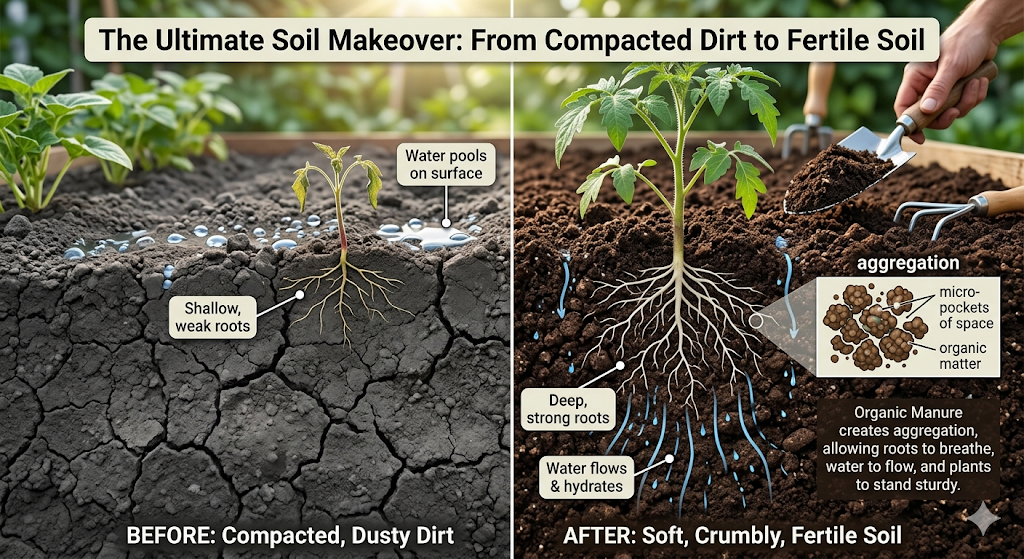
Ever tried digging into compacted, dusty backyard dirt? It’s exhausting for you, and impossible for your plants. Organic manures turn stubborn dirt into soft, crumbly, fertile soil through a process called aggregation.
By binding tiny soil particles into larger "crumbs," manure creates micro-pockets of space.
- Roots can finally breathe and push deeper.
- Water flows instead of pooling on top.
- Plants stand sturdier against strong winds.
2. Built-In Drought Resistance
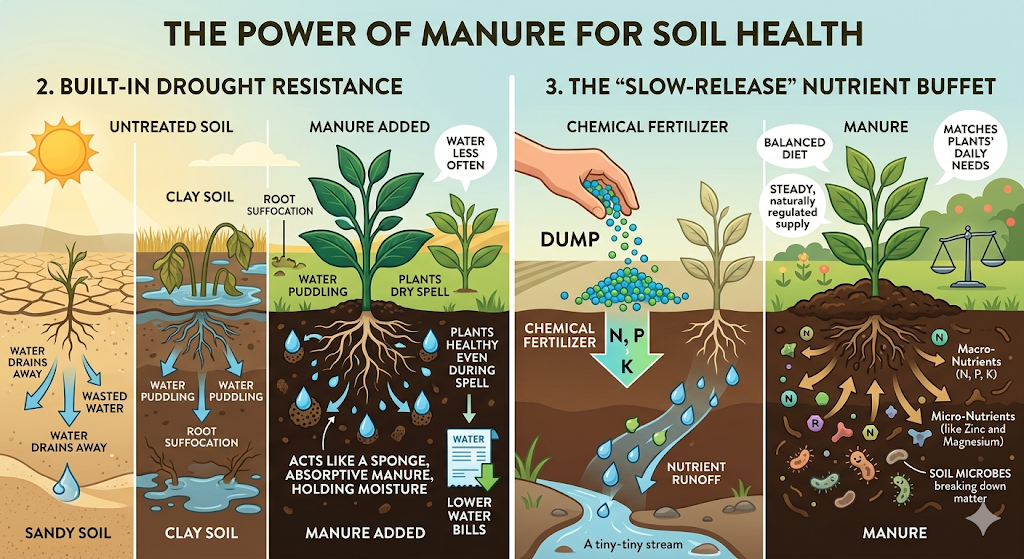
Think of organic matter as your garden’s personal underground reservoir. In sandy soils, water usually drains away before plants can take a sip. In heavy clay, it puddles and suffocates the roots.
Manure fixes both problems. It acts like a sponge, holding onto moisture in sandy conditions and improving drainage in clay. The result? You water less often, your water bills drop, and your plants stay vibrant even during a dry spell.
3. The "Slow-Release" Nutrient Buffet
Chemical fertilizers dump nitrogen, phosphorus, and potassium into the soil all at once. Plants take what they can, and the rest washes away into local waterways.
How Manure Does It Better: It delivers a balanced diet of macro and micronutrients (like zinc and magnesium) wrapped in organic matter. Soil microbes have to break this material down slowly, releasing nutrients gradually. This steady, naturally regulated supply perfectly matches your plants' daily needs.
4. Investing in Long-Term Soil Wealth
Every time you add organic manure, you are making a deposit into your soil's savings account. Over time, this material breaks down into humus—the dark, stable, nutrient-dense foundation of elite soil. Humus holds onto nutrients that would otherwise wash away, meaning your garden becomes more self-sustaining and requires fewer inputs each passing year.
5. Throwing a Party for Soil Microbes
Healthy soil is alive. It should be teeming with billions of microscopic helpers, including beneficial bacteria, fungi, and earthworms.
Chemical fertilizers ignore these creatures, but organic manure feeds them. These organisms are the ultimate garden crew: they break down nutrients into forms plants can easily absorb, naturally fight off root-rot diseases, and tunnel through the earth to keep it aerated.
6. Locking Down Your Topsoil
Erosion is a silent garden killer. When soil loses its structure, a single heavy downpour or a windy afternoon can sweep away your most fertile topsoil. Because organic manure binds soil particles together and often creates a protective, fibrous layer on the surface, it keeps your garden's valuable foundation exactly where it belongs.
7. Gentle on the Wallet, Kind to the Earth
Most organic manures are upcycled byproducts of agriculture and farming, making them incredibly sustainable. By choosing manure over synthetics, you are:
- Keeping chemical runoff out of rivers and streams.
- Supporting carbon sequestration (locking carbon safely in the ground).
- Saving money by relying on a long-lasting fertility cycle rather than constantly buying plastic bags of chemical quick-fixes.

The Conclusive Insights
Gardening isn't about forcing nature into submission; it's about nurturing a living system. When you switch to organic manure, you stop playing the role of a short-term chemist and start acting as a true steward of your land. Your plants will reward you with stronger root systems, brighter blooms, and a harvest that tastes exactly the way nature intended.......,